
The Race Condition Running
Drumheller
Drumheller
Marathon
0/0
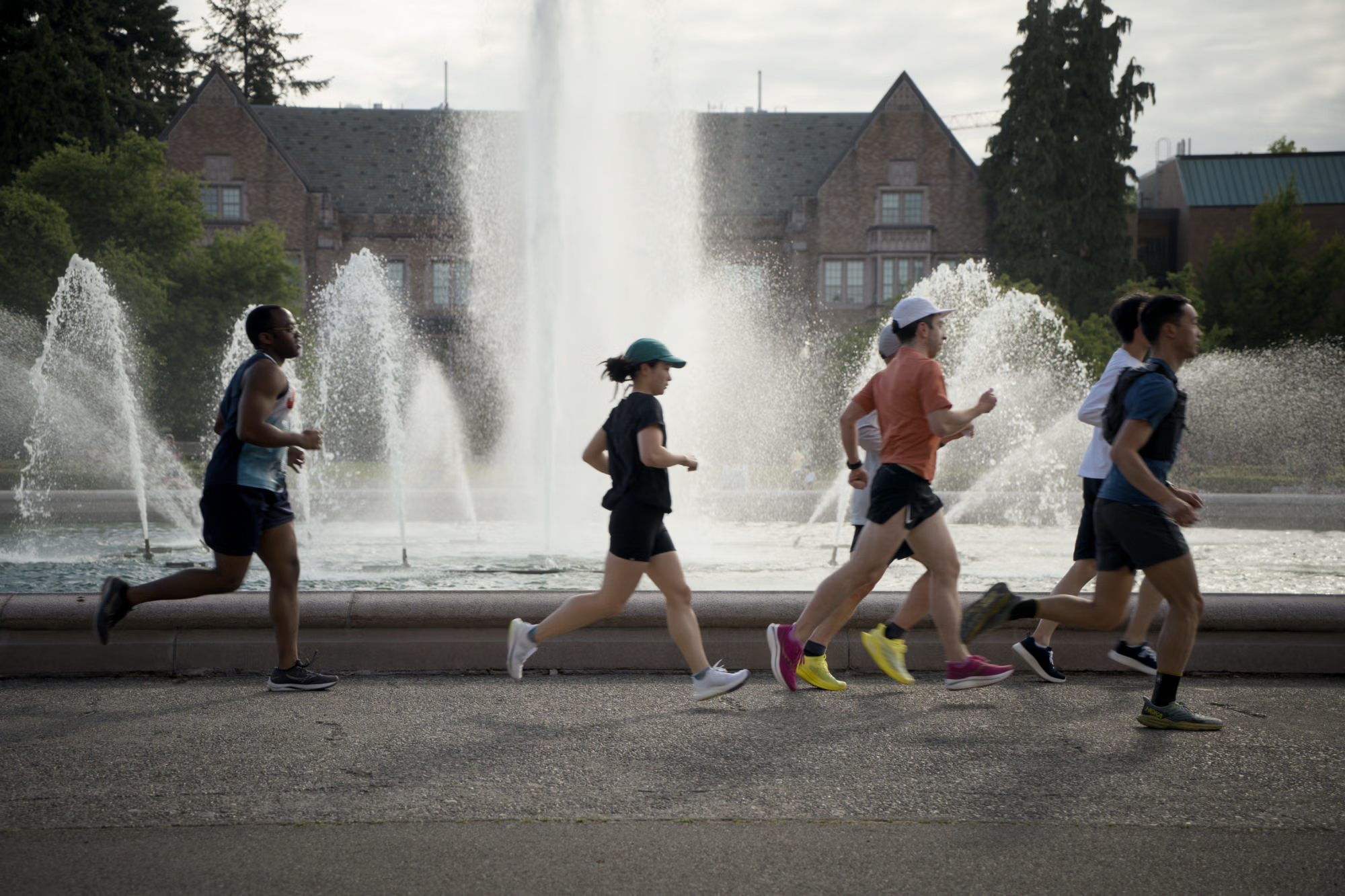
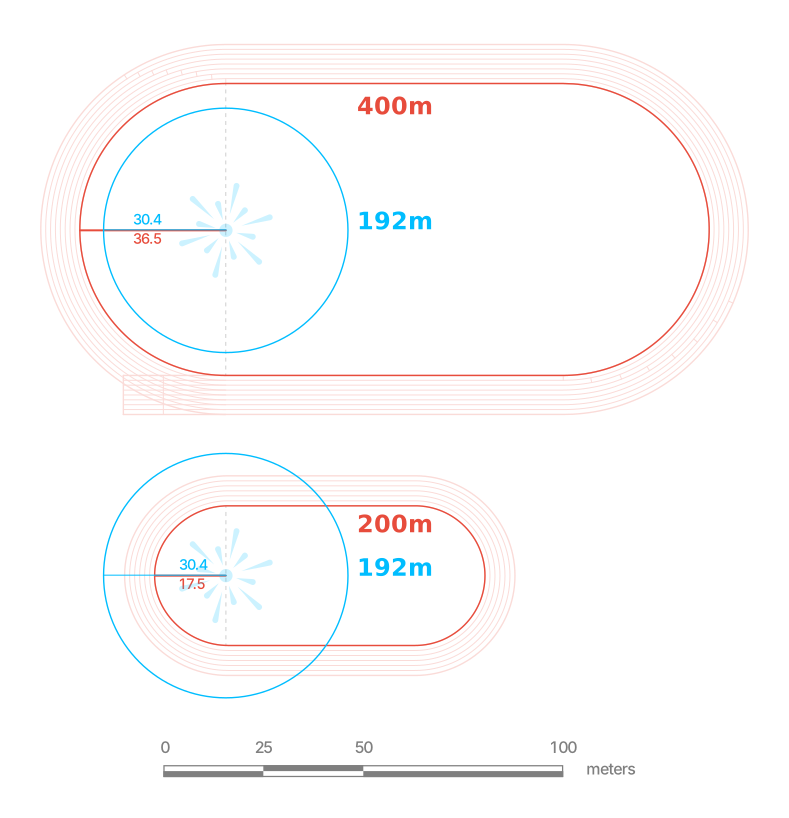
From the upper vista, loop around Drumheller Fountain and the duck ramp —219 laps for the marathon, 109 for the half. Both events will start at different times and locations. Participants aiming for fewer laps should start with the half marathoners.
The direction will flip periodically, and you must change directions only by rounding the marker placed at the edge of the finish line. We cannot provide you an official time unless you follow these instructions and complete the necessary number of laps.
While campus activity is reduced on weekends, expect to navigate around fountain-admirers, passers-by and cyclists. The course is not closed.

The course is served by the University of Washington light rail station. Many buses stop at UW or the nearby U District station.
Central Plaza Garage (CPG) beneath Red Square is the closest parking. See the University's page for rates and instructions. Check the parking calendar for any disruptions and leave yourself extra time for getting lost and paying.
Half marathon: members of the UW community and invited guests. Marathon: anyone.
No. Participants running or walking fewer than 109 laps are welcome to join for the last start time. Here are some lap counts for common distances. Add a lap if not starting at the official start line.
| Distance | Laps |
|---|---|
| 5k | 26 |
| 10k | 52 |
| 10mi | 83 |
Excepting pacers, full marathon participants must intend to complete the full distance.
The course does not close, but we may not be able to provide an official time past these cutoffs:
| Distance | Time | min/mi | min/km |
|---|---|---|---|
| Marathon | 4:30:00 | 10:18 | 6:24 |
| Half Marathon | 3:00:00 | 13:43 | 8:31 |
On June 6, the temperature in Seattle typically ranges from 52°F to 66°F and is rarely below 48°F or above 77°F. [...] The coolest time of the day is from 1:00 AM to 8:15 AM, with the coldest at 5:30 AM, at which time the temperature is below 54°F three days out of four, and below 57°F nine days out of ten. [...] The cloudiest time of day is around 5:30 AM, at which time the chance of overcast or mostly cloudy conditions is 59%.
You can stash a bag near the aid station. You'll have line of sight the whole race, but they won't be attended.
Use a running watch to mark laps if you're wearing one, though you should check that it can handle 100+ laps. GPS will clip the curve, so don't rely on it for more than a couple laps at a time. We'll have tally counters available if you prefer an analog counting aide.
Our experimental phone-based lap-counting service will also be available for all registered runners. We recommended using it as a backup for another method of counting.
Counting without assistance is not recommended.
The race will begin counterclockwise and alternate directions every 30 minutes to help balance the strain across your legs. Change directions only at the end of a lap and only by rounding the finish line marker.
Official times will be determined using a recorded video. It is critical that you run at least the required number of laps so we can provide you an official time.
Finalizing the results can take weeks. Please use the live tracking system so you'll have an unofficial time immediately, and to make it easier for us to mark times.
We need information about your plans and preparedness in order to assess whether we can accommodate you.
The event has a minimum field size of 3. It is extremely unlikely, but should we have fewer than 3 registrations on April 1st, we will notify registered runners to make alternative plans.
The timing cutoffs are the primary constraint; we do not want you to run a full marathon that we cannot provide you an official time for. We ask for evidence of a half marathon time commensurate with your marathon goal time to make this unlikely.
Yes. Runners intending to use pacers must submit a pacing plan with their application, and pacers must also register. Only a single pacer per time goal will be allowed on the course at a time, so you may be asked to coordinate with other runners. Unlike most road races, we allow rotating/non-starting pacers, however official times will only be given to participants who run the complete course.
Yes. In addition to the aid station there are benches surrounding the course. You must continue running the lap in the same direction as when you stopped or the lap will not count. We recommend you start and stop only on at the lap finish line so you can begin the next lap in either direction.
Yes, the full marathon will meet the B.A.A. criteria for a qualifying race (see Rules and Policies pp.5-6 §2.2.1).
Yes, but not substantially. You will need to supply an additional centripetal force due to the curve, but the effect of this is likely less than 1% when running at world record marathon pace on a 30m radius. Because the force increases in the square of velocity, the effect is negligible for recreational runners. There are individual differences in running technique and physiology that may make the effect more or less pronounced for you. Consider practicing on the course or a track.
Unlikely. Many athletes train and race on smaller radius tracks without issue during indoor track season. There is evidence that consistently running the same direction on small indoor tracks over time leads to strength asymmetries which likely cause injuries. Alternating directions is probably sufficient to avoid acute issues for most runners.
You may also take comfort from knowing that indoor track marathons have been held for years without problems.
Run from the start line and join us! You must enter the course from "behind" the finish line in the direction that the field is running. So, if we're running counterclockwise, start your first loop by crossing the line from the east, and otherwise from the west. Note that this event is gun time only.
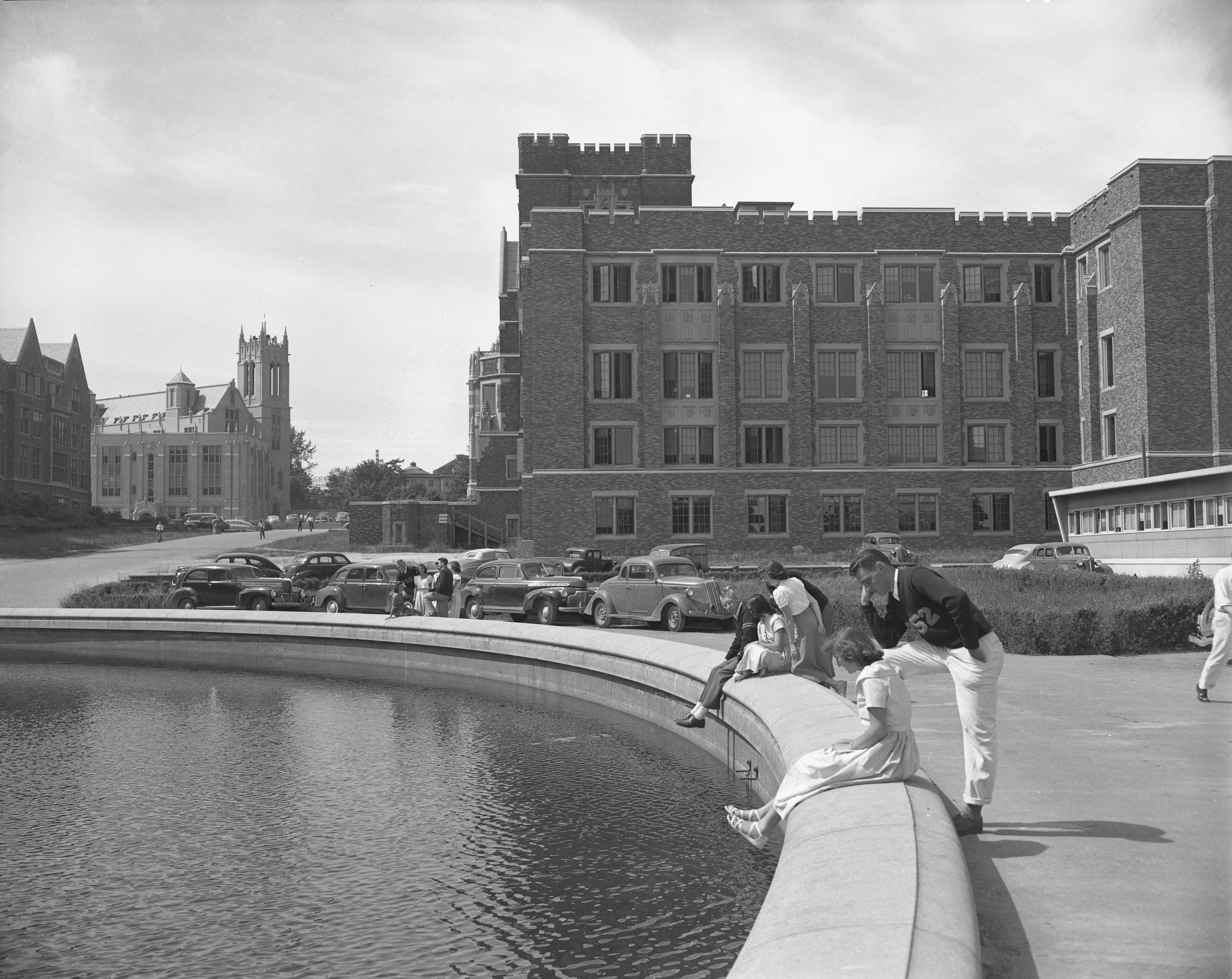
The Drumheller Fountain has been a source of enjoyment and pleasure to me, my family, and my friends. One evening during the hot weather, for example, I sat with three visitors on the rim of the fountain, surrounded by the rose garden, cooled by the spray, watching and hearing the plumes of water as they rose and then fell into the pool.
